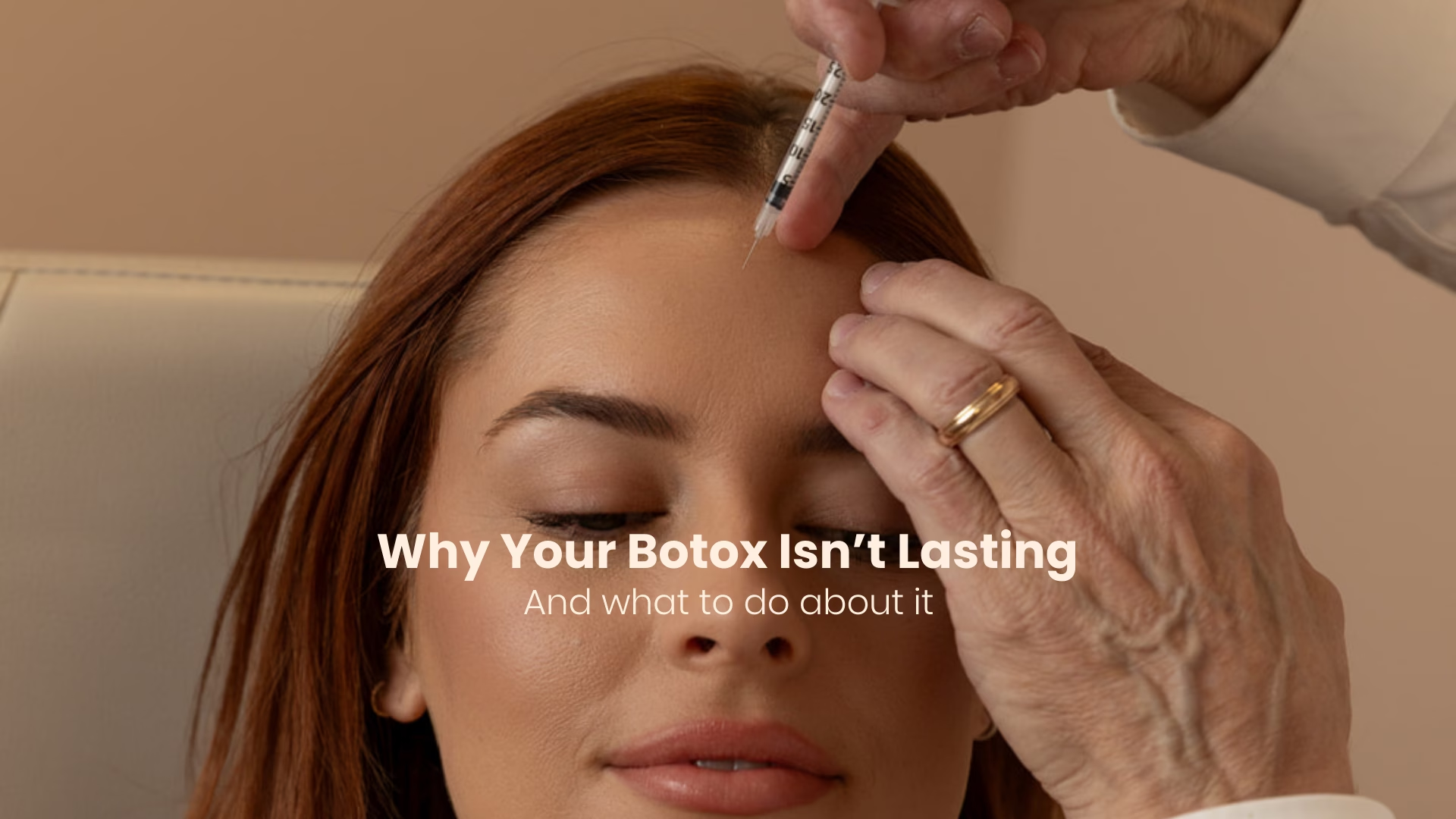
You leave your appointment loving your results and then six or eight weeks later you’re in the mirror wondering if it even worked. It’s frustrating, and honestly, a little defeating. But here’s what we tell our patients every time: if your Botox isn’t lasting three months there’s almost always a reason. And more importantly, there’s almost always a fix.
Botox Shouldn’t Wear Off That Fast, Here’s What’s Going On
Reason 1: You aren’t getting enough units.
The general rule for Botox® is dosing equals duration.
According to Dr. Gill, how many units you receive at your first Botox® treatment is determined by the FDA recommendation for each treatment area. This recommendation is data-backed after the product manufacturer completes FDA trials, and for Botox is also backed up by over 20 years of clinical cosmetic use.
Experienced injectors start with general dose requirements and adjust according to their own evaluation of the client.
Dr. Gill explained:
“During the exam you can see how a person’s muscles move and get a sense of how strong different facial muscles are. That helps predict the needed dose. Then we follow up to evaluate the individual’s response and adjust the dose accordingly.”
This is why we schedule a 2-week follow up appointment to get a sense of results and whether or not the dosing needs to be adjusted. Your anatomy and muscle strength influence how you respond, a two-week check-in helps dial in the dose so your next treatment lasts longer.
So, if your Botox® isn’t lasting, consider increasing the dose (number of units).
Reason 2: You Are a Fast Metabolizer
Some people metabolize product faster than others, which shortens how long Botox is effective.
There are a few reasons for this:
- Genetics – Inherent metabolism does influence the duration and some people simply metabolize Botox faster.
- Activity level – Athletes and intense exercisers tend to metabolize Botox much faster.
For fast metabolizers, the solution is to either increase the dose, or get treated more frequently.
Dr. Gill also notes that sometimes receiving more frequent treatments can increase the cost compared to increasing the number of units. Experiment to find which method works best for you.

Reason 3: You Are Unresponsive
Some people are, for whatever reason, simply unresponsive to Botox®.
The solution? Switch neuromodulators.
Botox is just one of many neuromodulators.
Another option is Xeomin®. Botox® and Xeomin® are both neuromodulators. They have a slightly different molecular structure so some people to respond better to one versus the other.
One Final Tip to Make Everyone’s Neuromodulator Last Longer
Add a zinc supplement to your daily routine starting 2 weeks before and 2 weeks after your Botox appointment.
Studies have shown that increasing you zinc intake immediately before and after your Botox injection can help extend the effectiveness of the product.
Before you go out and purchase zinc, it’s important to discuss adding any vitamin or supplement to your regimen with your doctor.
Not Sure? Let’s Figure It Out.
If you’ve noticed your Botox wearing off quicker than anticipated, a great place to start is a consultation with one of our providers. We’ll look at your treatment history, current dosing, and goals to give you an honest assessment. Sometimes the answer is just a dosing or product adjustment, and we’d rather you know that than keep spending money on results that don’t last
Book your appointment at ElàMar in Nashville or Decatur, AL – fist-time patients receive 5 FREE units of Botox.

The answer depends on your dosing, muscle strength, metabolism, and other lifestyle factors. The best way to find out is to talk with a licensed provider.
Frequent intense exercise can impact how quickly your body metabolizes your Botox.
Zinc supplements have been clinically proven to extend the longevity of the Botox by taking it 2 weeks before your Botox appointment and continuing 2 weeks after your injections. Note: This is not prescriptive medical advice. You should consult with a medical professional before adding any new supplements to your routine.
The FDA has approved 64 units of Botox in the upper face- 20 in the forehead, 20 in the glabella (11s), 12 on each side for crow’s feet.